Posted on

Lactose Intolerance

Did you know that 30 million Americans are lactose intolerant. As an owner, operator or employee of a frozen yogurt store it is important for you to understand what that means and how you can provide products for people with lactose intolerance.

What is Lactose?

Lactose is a milk sugar found in many dairy products.

What is Lactose Intolerance?

A deficiency in the body of a natural enzyme called lactase, which can cause symptoms of gas, bloating and diarrhea when foods with lactose are eaten. Lactase is needed to fully digest lactose, a sugar found mainly in dairy products. Lactose intolerance can cause severe discomfort, but is not life threatening.

How is Lactose Intolerance different from Milk Allergies?

A milk allergy is when the immune system overacts to a protein in milk and attacks dairy like it is a harmful invader. It is most common in infants and young children. Symptoms can range from hives to anaphylactic shock. A severe allergic reaction can be life threatening and is very different from lactose intolerance.

Is lactose intolerance very common?

Yes. About 65% of people worldwide have some degree of lactose intolerance. Here is a breakdown for a few geographic regions/ethnicities:

  • Asia: 80%
  • Africa: 70-90%
  • Southern India: 70%
  • Northern India: 30%
  • France: 17-65%
  • Germany: 15%
  • England: 5-15%

How do you treat lactose intolerance?

Many people can handle a small amount of dairy and be fine – like 8-12 ounces of milk. For those that experience the symptoms listed above, the immediate solution is to reduce the amount of lactose in the diet. There is not currently a cure. But there are commercially available enzyme substitutes. There are also many products available that don’t contain dairy or lactose, like Nanci’s new non-dairy soft serve mixes.

Nanci’s Non-Dairy Soft Serve

Nanci’s offers a line of non-dairy soft serve mixes that include:

  • Fruit Freezer Sorbet – a neutral base that can use most of Nanci’s flavor concentrates. The sorbet mix is colder and icier than regular soft serve.
  • Fruit Whip – a neutral base that can use most of Nanci’s fruit flavor concentrates. This base mix is part creamy and part icy, it has a bolder taste than the Fruit Freezer Sorbet.
  • Non-Dairy Vanilla Soft Serve – a creamy, vanilla/neutral base. Most of Nanci’s flavors can be added to this base.
  • Non-Dairy Vegan Chocolate Soft Serve – can be served without flavoring for a rich chocolate or can be used with many of the Nanci’s flavorings. This base contains no animal products and so it is a vegan mix.

Nanci’s non-dairy mixes contain PowerPro Active Cultures that provide all the health benefits of regular yogurt but without the dairy.

Sources:

http://digestive.niddk.nih.gov/ddiseases/pubs/lactoseintolerance/; http://milk.procon.org/view.resource.php?resourceID=000661; http://usatoday30.usatoday.com/tech/science/2009-08-30-lactose-intolerance_N.htm; http://www.mayoclinic.com/health/lactose-intolerance/DS00530; http://inhealth.cnn.com/digestive-health-center/10-things-to-know-about-lactose-intolerance/
Posted on

Importance of Cleaning and Sanitization of Frozen Yogurt Machines

Cleaning your frozen yogurt machines properly can help produce better tasting product and prevent any issues of harmful bacteria. Most manufacturers recommend that you clean and sanitize your machine at least once every three days, but some municipalities may require you to clean the machine every day. Check with your local health department for your local regulations. Dairy products can breed many kinds of harmful bacteria, so it’s important to stay on top of your cleaning and sanitization schedule.

The first thing to do before any cleaning is to look in the owner’s manual for the proper procedure. Many machines will come with a special brush kit to get product out of every part of it. The manual will tell you where to use them. The manual will also tell you what types of sanitizer are and aren’t okay for your machine, and which parts you should inspect every cleaning for possible replacement.

Most frozen yogurt machines follow these procedures. First, drain the machine of product. Depending on the age of the product you could put it into a freezer and reuse it. Next, get access to the hoppers and pour in water. Turn on the cleaning cycle and let it run for the recommended time. Drain the water and use your brushes to any speck of product out. Repeat the rinsing and brushing until it looks clean, then remove the scrapers and any other recommended parts. Clean these thoroughly, and check the hopper again for any missed product.

Once your parts are clean, it’s time to sanitize them. Make sanitizer according to the package directions, then soak any parts you removed for the recommended time. Make another batch to put into the hopper and use it according to your owner’s manual. Once you’re done soaking, rinse out the hopper and the parts, replace them, and then put your product back into the hopper and turn the machine on as normal.

In about 20 minutes, you should be ready to go again with fresh frozen yogurt in a clean and safe machine. Not only that, but your frozen yogurt will taste much better too. The first batch out of a clean machine is the best! Try it yourself and see.

About the Author

Emily is the customer information “champion” at Spaceman USA – a friendly manufacturer of soft serve and frozen yogurt machines. With technical knowledge of the machines and understanding of soft serve business, Emily writes in various topics – from business management to delivering the best food quality to customers.

Posted on

Daily Opening Procedures

Every frozen yogurt operator asks how they can make fantastic and consistent frozen yogurt. They want their product to come out of the machine with the same creamy, smooth texture every day. The key to achieving this is doing two daily procedures every morning before opening.

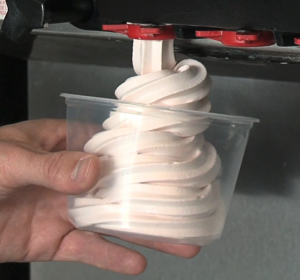
Prime the MachineYogurtInCup

Priming the machine refreshes the product in the freezing cylinder and hopper. Here are the steps:

  1. With the machine on Standby (or Overnight) Mode, remove the air tube (carburetor tube) from the hopper.
  2. Stir the mix in the hopper with a small whisk.
  3. Dispense 1-2 quarts of liquid mix from the machine (by pulling the handle on the front).
  4. Pour the mix back into the hopper and stir with a whisk.

The machine is now primed and ready to have the air set.

Set the Air

With gravity machines, the mix is poured into a hopper on the top of the machine and gravity pulls the mix into the freezing cylinder. On a gravity machines you need to manually set the air, for a maximum of 35% air.

One very important piece on the machine is the carburetor tube or air tube. The air tube is a skinny tube – usually stainless steel – that you insert into the intake hole in the bottom of the hopper. Once inserted, the top of the tube sticks up out of the product allowing air to get down into the product. All air tubes have some way to shut off the product intake – either by flipping the tube over or by closing off the intake hole using a sleeve that fits around the tube.

Here are the steps to set the air:

  1. After you’ve primed the machine, insert the air tube with the feed hole at the top of the tube (sticking out of the mix) to stop the product from flowing into the freezing cylinder.
  2. Keeping the intake closed, dispense 8-10 ounces of frozen yogurt into a clean cup. This product can be put back into the hopper.
  3. Turn on the soft-serve machine and wait for it to freeze down and for the motor turn off.
  4. Once the motor turns off and the product is frozen, open the air intake either by flipping the air tube around so the feed hole is now at the bottom (submerged in the mix) or sliding the sleeve on the tube (depending on your style of air tube).
  5. The overrun is now set and the product should come out smooth and creamy. As long as you leave the air tube in place it will stay this way. You can repeat this process as needed.
Another important factor in dispensing a great product is the temperature of the frozen yogurt coming out of the machine. Nanci’s regular mixes are best served at 17 degrees F, and the stevia and non-dairy mixes are best served at 24-25 degrees F.
Posted on

Tips for buying a soft-serve machine

When opening a frozen yogurt store, the soft-serve machines will be the largest single expense. A good machine is critical to serving good product. There are several basic things you need to know about frozen yogurt machines. This information may seem overwhelming, but given that you might spend $50,000 on your soft-serve machines, the investment of your time will be worth it.

The Basics
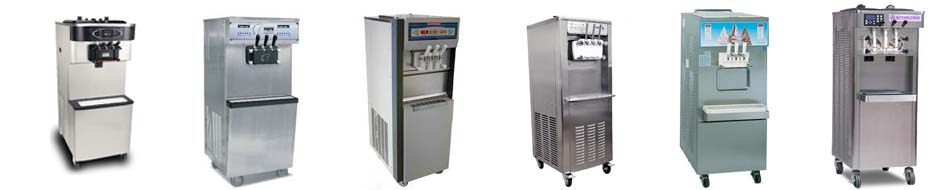
To make frozen yogurt you’ll need a commercial grade soft-serve machine (soft-serve machines and frozen yogurt machines are the same thing). Here are the basic components of the machine:

  • Hopper – the area where you pour the frozen yogurt mix.
  • Freezing cylinder – this is a small shaft that sits horizontal inside the machine. The mix drips from the hopper into the freezing cylinder where it freezes.
  • Beaters – these are inside the freezing cylinder and they spin around to keep the mix from freezing solid. They also help whip air into the machine and make a nice creamy product.
  • Front plate – this is the piece that goes on the front of the machine with the handles. It also includes the opening where the frozen yogurt is dispensed. Most machines have a star shaped design where the product comes out – giving the frozen yogurt the look we all recognize.
  • Overrun – this is the air that is in the frozen yogurt mix. Air is critical to making a nice creamy product. Without overrun, the product will come out dense, icy, and won’t taste right. Visit the Training page on the Nanci’s website for a video on how to control overrun.

Machine Sizes
There are several different sizes, but for our purposes we’ll break it down into two types – floor model and counter-top model.

Floor model – these machines go all the way to the floor and are on rollers. They are either medium or high capacity and usually require 220-volts, but not always (see the section on electricity). They usually have two flavors and a twist (although they can come in a one-flavor model). For frozen yogurt shops, this is usually the best option.

Counter-top model – these machines sit on a counter or cart. They are usually low capacity to medium capacity. They are available with one flavor one two flavors and a twist. These machines can be a good option as an add on to an existing concept, like a sandwich shop.

Electricity
Most medium to high-capacity frozen yogurt machines require 220 volt electricity, although some are 115 volts. In either case, they will require different outlets than your standard home electrical outlet. They will also require higher amps than normally. Be sure to check with an electrician to see what will be required and how much it will cost.

Gravity versus Pump
This refers to how the mix gets into the freezing cylinder. With a gravity machine the hopper is at the top of the machine. The mix is poured into the hopper and then gravity pulls the mix into the freezing cylinder. With a pump machine, the hopper is pressurized and the mix is pumped into the freezing cylinder. The advantages to a gravity fed machine is that they cost less and are easy to fix. The advantages to a pump machine is that you have complete control over the amount of air you put into the final product. This can affect the quality of your product and the cost.

Gravity machines can put in up to 45% air and pump/pressurized machines can put in up to 100% air (which means equal parts mix and air).

Air Cooled versus Water Cooled
The motors in soft-serve machines produce heat and need to be cooled. The two methods for cooling are either air cooled with a fan or water cooled with pipes that run water through the machine to cool it. Overall, we recommend air cooled because they are less expensive to install and need less maintenance.

Air cooled machines don’t require any additional investment when installed, and they can be less expensive to operate (depending on your electricity costs versus water costs). Water cooled require installation of a water system, which can cost $15,000-$40,000. Water cooled machines make less noise and produce less heat. You may save on utility costs if your water costs are much lower than your electricity.

Soft-Serve Machine Companies
There are several companies that manufacture and sell frozen yogurt machines. Some are made in the United States and others are made in other countries, like China. Prices on floor models range from $5,000 to $15,000. The machines will vary in quality, warranty offered, and production capacity. The right machine for you depends on your constraints (like cash or the ability to finance) and your goals (how many machines you need, the type of concept you are doing). There isn’t always just one right answer for what machine you should buy. Contact a frozen yogurt expert at Nanci’s and we can discuss it with you. We don’t sell machines, so we’re a great neutral, third-party to talk with.

If you decide to buy machines at the low-end of the price range, make sure to machines are made with good materials and parts. For example, all machines are made with stainless steel, but steel has different grades of quality. Some machines that are made with the low-quality stainless steel can rust and cause many problems.

Also, keep in mind that regardless of the brand of soft-serve machine you purchase, you’ll want to make sure you have good access to service. All machines break at some point, and you’ll need a good technician that can work on them.

In your negotiations with machine companies be sure to ask for free in-person training and free parts (such as o-rings and machine lube). Some companies offer free Nanci’s product to off set the initial costs of the machine.

If you have any questions call Nanci’s Frozen Yogurt at 1-800-788-0808.

Posted on

Three keys to starting your own frozen yogurt business

Here are three vital keys to starting a frozen yogurt business on your own:

1. Business understanding and experience. If you don’t have these skills find a partner or advisor who does.

  • Basic money management skills (payables and receivables).
  • Inventory management.
  • Attention to detail.
  • People management skills.

2. Find great suppliers. Great suppliers should be more like partners with you. They can give you advice and help solve your problems. You’ll need suppliers for:

  • Frozen yogurt mix and flavorings – give us a call – we know a great company : )
  • Soft-serve machines.
  • Toppings.
  • Supplier, including cups and spoons.
  • Other equipment (Point of Sale system, sinks, refrigerator/freezer, toppings bar, tables, chairs, toppings containers, etc.).

3. Effectively market your frozen yogurt business. The elements of effective marketing include:

  • A great location.
  • In-store marketing and great customer service to drive repeat customers.
  • Advertising or other marketing that makes sense in your area (local newspaper or magazine, flyers at events, coupons, mailers, etc.).
  • Online and social media presence.
  • Word of mouth. Eventually this will be one of your greatest marketing tools, but you can’t just sit back and expect it to take off.

Most importantly, don’t overcomplicate things…and have fun!

Posted on

Frozen Yogurt Training Videos

We’re excited to introduce three new training videos available on our website. We’ve kept them short and sweet, but packed with useful demonstrations.

The videos include:

  • How to Prepare Nanci’s Mix
  • How to Add Air into Mix
  • Soft-Serve Machine Overview

You can view the videos at www.nancis.com/training

Here’s our new Intro to Nanci’s video as a teaser…


Posted on

Improving Your Customer Service

Customer Service is the root of many businesses, particularly the Frozen Yogurt industry. For most people, going out to grab a cup of froyo isn’t just about the smooth and creamy treat melting on your tongue and tickling your taste buds.  It’s about the experience.  Customer Service is not a transaction — it is the relationship with your customer. It’s making that frozen desert into a little cup of personal bliss for each customer.

Important basics to remember

-SMILE! Even the friendliest person in the world might come across as indifferent or fake if that is what their face says. Remember, the amount of communication between two people is predominantly non-verbal.

-BE ATTENTIVE.  No one likes to be ignored. Greet customers as they enter, and bid them farewell as they leave. On occasion your shop might be very busy — perhaps a line out the door and around the corner (good for you!) — but remember to keep checking in with the customers as they come in and as they wait. It does not matter if they are at the front of the line or just stepping into the back, their business matters.

-BE PROFESSIONAL. Hop off the counters, and wash your hands often. Quit touching your face and looking at your feet. Be confident in how you carry yourself in the workplace and show respect even when disrespected (hey it happens). Keep composed and be ready to work!

-MAKE SUGGESTIONS, GET CREATIVE. Most frozen yogurt shops have local favorites or signature flavors.  These are perfect things to suggest to new customers or returning customers wanting to try something new. Don’t be afraid to experiment! Finding weird and new ways to combine flavors and toppings reinvents the experience for customers and brings back that first-time feeling that is both exciting and mysterious.

-KEEP BUSY. I’m sure everyone is familiar with the “if you can lean, you can clean” phrase seen often in the food industry work place. As an employee, often times work can drag on, which can begin to reflect in your mood and in turn reflect out towards others. Staying on top of cleaning and regular store maintenance in between gaps in customers will not only improve business but also helps pass the time. Take a little extra time cleaning the tables or floors. Or prepare for the rush hour.

-DEVELOP RELATIONSHIPS. There is nothing quite like walking into a neighborhood shop and being greeted by a familiar face and even by name. This sense of familiarity and friendliness creates a community feel to your shop. People like to feel that they are making a purchase from people, rather than a corporation or a business. You can also develop relationships with neighboring businesses and their employees. Not only can they be a great marketing resource for you, but they can be great customers as well.

Most importantly, always remember that the customer comes first. The customer is the point and purpose of a business. Make coming to your store the highlight of your customer’s day.

Posted on

Should you buy a frozen yogurt franchise?

Many entrepreneurs who want to start a frozen yogurt business start by looking at franchise opportunities. People ask us all the time, should I buy a franchise or do it on my own?

We feel that in most cases entrepreneurs are better off doing their own concepts and here’s why.

There are three main reasons to buy a franchise:
1. To buy into a brand that has strong brand equity.

Our thoughts: there are only a couple of frozen yogurt brands with national name recognition, but it is very expensive to buy a franchise and they aren’t even available in most markets. Internationally, there really aren’t any brand names.

Conclusion: you’re better off building your own brand.

2. A franchise provides step-by-step guidelines on how to start and run your business.

Our thoughts: this can make sense if your business is extremely complex or difficult to start…but frozen yogurt shops just aren’t that complicated. With thoughtful research and help from suppliers you can easily figure it out on your own.

Conclusion: you’re better off creating your own concept.

3. Gain access to proprietary products that are only available if you own that franchise.

Our thoughts: with products like Nanci’s Frozen Yogurt available, who needs a franchise product?!? In most cases, you’ll pay a premium for product that the franchisor will sell you…and it may not even be as good as other products on the market.

Conclusion: it’s not worth paying the franchise premium for your mixes. Contact us at Nanci’s to talk more about our mixes.

So unless you feel very strongly about one of these three reasons, you’re better off starting your own yogurt shop with your own brand. This gives you complete control of running the business and puts all the profits in your pocket instead of the franchisor. Read our blog article about the keys to starting your own frozen yogurt business.

Posted on

How to Make a Profit with a Frozen Yogurt Business

Frozen yogurt shops are one of the hottest retail concepts around. Many people see how simple the concept is, the low investment cost, and the high margins and think it is a no brainer. They expect to open their shop and start turning an amazing profit right away. But it’s not quite that simple. Check out the profit calculator on our website for a customized analysis for your concept.

There are several key drivers to making a profit with a frozen yogurt store. It is important to emphasize profit versus sales. You may have lots of sales, but if your costs are too high you won’t make any profit. You should think of these profit drivers as dials or levers – you can adjust the dials various ways to maximize profit.

Key Profit Drivers

Sales Revenue
  • Volume – the number of customers per day and the number of ounces of yogurt sold
  • Price per ounce
  • Sales of additional items (non yogurt items)
Costs
  • Labor costs
  • Rent & utilities
  • Product costs (yogurt mix, flavorings, toppings, etc.) – don’t forget to include the cost of free samples
  • Supplies (cups, spoons, napkins, etc.)
  • Store and equipment maintenance


Turning the Dials

Increase Sales Revenue

  • Get more customers. Typically this will mean more costs (like advertising and marketing), but it you can also be creative and find traffic generating ideas with no or little cost. Another way to drive more traffic is to improve your product by offering new or unique flavors and by creating a unique product compared to your competitors. Nanci’s mixes and flavors are ideally suited for this – contact us to discuss further.TippingPointCORRECTED
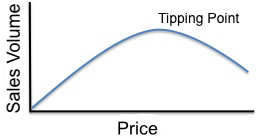
  • Increase the price. You can increase price and often not affect sales volume, but this is tricky because thereis an elusive price Tipping Point. When you cross it your volume will actually decrease because either customers will stop coming or they will buy less. This Tipping Point is unique to every area and every store. One approach is to keep your base price per ounce high but then use discounts and promotions to give customers a lower effective price. Remember that it is much easier to lower your price than it is to raise it.

Lower Costs

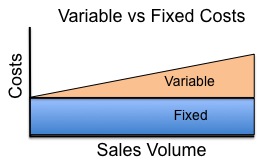
When evaluating costs there are Fixed Costs and Variable Costs. Fixed Costs are costs that are the same regardless of how many customers you serve. For example, your rent cost will be the same whether you serve 10 customers or 300.  Rent is a fixed cost. On the other hand, cups are a variable cost because you only incur costs for each customer.

  • Rent. One of the largest single costs for your store will be rent. There are a couple strategies to take when deciding on a location. For the purposes of simplicity, we’ll break it down into two strategies at opposite ends of the spectrum, even though in reality there are various strategies in between these two.

High Rent/High Volume. If the location is high rent it needs to also be a high traffic area to drive your sales volume. High rent areas may also allow you to charge more per ounce. In order for this strategy to work, you must have a large number of customers.

Low Rent/Low Volume/Low Cost. If the location is a very low rent property that means it’s probably off the beaten path and doesn’t have as much natural traffic. Generally, this would result in less traffic and lower sales volume, although there are stores that are in horrible locations and still gain a “cult following” and have lots of traffic. A low rent location may also mean you need to charge less per ounce, lowering your sales revenue. In order for this strategy to work you have to keep your costs extremely low and find ways to generate traffic in spite of your location.

  • Labor. Labor will most likely be your single highest cost. The big question here is whether or not you can run your store with just one employee. Our profit model shows that unless your store has strong volume (150 customers per day or more), you could lose money having two employees staff your shop. Of Course there are other factors to consider, like employee safety and or employee fraud.
  • Product Costs. this is also a tricky area, because your entire concept is based on your frozen yogurt mix. If you mix isn’t good, you won’t succeed. But at the same time, you shouldn’t throw money away on an overpriced product. Nanci’s solves this issue with mixes that are high-quality, premium mixes, but at a very competitive price.
  • Samples. most likely, the customers will demand free samples, but at the very least you should understand how many free samples you are giving away and how it is affecting your costs. One option is to have the sample cups behind the counter so the customer has to request one from an employee. Studies show that when shoppers make eye contact with a store employee they are less likely to steal something – I’d like to think this principal holds true for abusing the free samples as well.

The general belief in the business world, is that you don’t really make a substantial profit on food retail shops until you own three or more. Depending on your available capital, you may want to consider opening 2 or 3 shops at the same time. This will also give you immediate brand relevance and can often protect your area from incoming competitors.

Don’t forget to check out the profit calculator and feel free to call 1-800-788-0808 or email info@nancis.com with any questions.

Posted on

Increase Sales Part 3: Marketing Tips

Drive Traffic to Your Frozen Yogurt Store with Marketing

“You can have the best product or service in the world, but if people don’t buy – it’s worthless.” Noel Peebles, Marketing Expert


I would add to this quote that if people don’t know about it – it’s worthless.

With the increasing competition in the frozen yogurt industry and stores popping up on every corner, you have to make consumers aware of your shop. Each community is different and some marketing tactics will work in some areas and others will not. The key is to try different things and find what works for you. And remember that what worked yesterday, might not work tomorrow.

The only limit to your marketing is your own creativity. Some ideas can be expensive, but there are plenty that are not.

Here are some ideas we’ve gathered from our customers.

  • Cross marketing with local businesses. Network with gyms and other retails to place coupons or signs in their shop. Host theme nights. Create nights for special interest groups – like book clubs, girls night out, religious study groups, singles groups, etc.
  • School fundraisers with your local elementary school.
  • Coupon mailers.
  • Daily deal websites. Living Social, Groupon, AmazonLocal, or Google Deals.
  • Create a flavor contest. Have people submit their ideas for a flavor via Facebook and in store. Pick three finalists and put their flavors in your machines for one week – with their photo and name above the machine with their flavor. Keep track of how many ounces of each flavor is consumed to determine the winner. This will create a buzz and cause the finalist to get friends and family to come eat their flavor.
  • Group contests. Similar to the Create a Flavor contest above, but have groups compete against each other. This can be especially effective with sororities. The winning can get a donation to the charity of their choice.
  • Street marketing. A sign holder or a person in a frozen yogurt costume can draw attention to your shop.
  • Sponsor or advertise at local races. Just about every community has 5K, 10K, triathlons, and other races throughout the year. There are many options for advertising, including dropping coupons into the bag each racer gets.
  • Social marketing. Leverage Facebook, Instagram, and other social media sites. There are many creative contests and games you can do combine social media with in-store interaction.
  • Online marketing. Create a free Google Places account, as well as other online directory listings. Google AdWords or Facebook advertising can also be effective.
  • Loyalty programs. Tools like Perka can help you put together customer loyalty programs and punch card systems.


We’d love to hear your ideas. Email us at info@nancis.com