Posted on

Frozen Yogurt Toppings

Toppings are a critical part of frozen yogurt shop operations. They play a big role in customer satisfaction, but if not managed closely you an actually lose money on your toppings. You should try to be below 30 cents per ounce on your average toppings cost. If you can get down towards 23-25 cents per ounce you are doing great.

Be careful of expensive toppings that are very light, like whipped cream. Here are a couple of tricks to manage the more expensive toppings.:

  1. Put the most expensive toppings the farthest away from the last soft-serve machine so customers fill their cup on the less expensive toppings.
  2. Put the most expensive toppings at the back of the toppings bar so they are a little harder to reach.
  3. Use smaller serving spoons for the more expensive toppings.

Also, with fresh toppings, such as fruits, you should rotate the toppings to ensure that you always have fresh product in the toppings bar.

Here are suggested list of toppings. You can find recommendations for toppings supplies on our Equipment & Supplies page.

Dry Toppings

  • almonds
  • butterfinger
  • cap’n crunch
  • carob chips
  • cocoa pebbles
  • coconut flakes
  • fruity pebbles
  • graham cracker crumbs
  • gummi bears
  • heath toffee
  • jelly bellies
  • kit kat
  • m&m’s
  • peanut m&m’s
  • mini caramel cups
  • chocolate chips
  • mini peanut butter cups
  • nestlé crunch
  • non-fat granola
  • old fashioned granola
  • oreo cookies
  • peanuts
  • pecans
  • peanut butter chips
  • reese’s peanut butter cups
  • snow caps
  • chocolate sprinkles
  • rainbow sprinkles
  • thin mint cookies
  • twix
  • walnuts
  • yogurt chips

Fresh Toppings

  • strawberries
  • raspberries
  • blackberries
  • blueberries
  • peaches
  • mangos
  • kiwi
  • pineapple
  • bananas
  • cinnamon apples
  • mochi
  • cookie dough
  • fudge brownies
  • fat-free brownies
  • cheesecake bits

Hot Toppings

  • hot fudge
  • caramel sauce
  • non fat / no sugar-added fudge

Nuts_Full_header

Posted on

Importance of Cleaning and Sanitization of Frozen Yogurt Machines

Cleaning your frozen yogurt machines properly can help produce better tasting product and prevent any issues of harmful bacteria. Most manufacturers recommend that you clean and sanitize your machine at least once every three days, but some municipalities may require you to clean the machine every day. Check with your local health department for your local regulations. Dairy products can breed many kinds of harmful bacteria, so it’s important to stay on top of your cleaning and sanitization schedule.

The first thing to do before any cleaning is to look in the owner’s manual for the proper procedure. Many machines will come with a special brush kit to get product out of every part of it. The manual will tell you where to use them. The manual will also tell you what types of sanitizer are and aren’t okay for your machine, and which parts you should inspect every cleaning for possible replacement.

Most frozen yogurt machines follow these procedures. First, drain the machine of product. Depending on the age of the product you could put it into a freezer and reuse it. Next, get access to the hoppers and pour in water. Turn on the cleaning cycle and let it run for the recommended time. Drain the water and use your brushes to any speck of product out. Repeat the rinsing and brushing until it looks clean, then remove the scrapers and any other recommended parts. Clean these thoroughly, and check the hopper again for any missed product.

Once your parts are clean, it’s time to sanitize them. Make sanitizer according to the package directions, then soak any parts you removed for the recommended time. Make another batch to put into the hopper and use it according to your owner’s manual. Once you’re done soaking, rinse out the hopper and the parts, replace them, and then put your product back into the hopper and turn the machine on as normal.

In about 20 minutes, you should be ready to go again with fresh frozen yogurt in a clean and safe machine. Not only that, but your frozen yogurt will taste much better too. The first batch out of a clean machine is the best! Try it yourself and see.

About the Author

Emily is the customer information “champion” at Spaceman USA – a friendly manufacturer of soft serve and frozen yogurt machines. With technical knowledge of the machines and understanding of soft serve business, Emily writes in various topics – from business management to delivering the best food quality to customers.

Posted on

Frozen Yogurt vs Soft-Serve Ice Cream

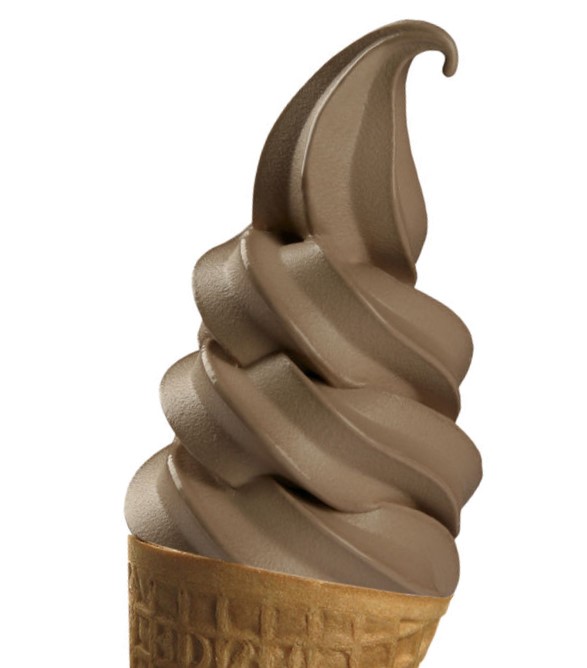
You might not realize that Nanci’s chocolate and vanilla bases are rich and creamy just like soft-serve ice cream. Texture depends on how much air you get in the product and the quality of the ingredients. We don’t sell a soft-serve ice cream because it is so similar in creaminess to our frozen yogurt but lacks the health benefits.  In fact, you could choose to serve Nanci’s and not call it frozen yogurt, some of our customers sell it as soft-serve and don’t even call it frozen yogurt at all.  It is up to you how you want to name it and market it.

The benefits of Frozen Yogurt vs Ice Cream are many:
Frozen Yogurt provides the same satisfaction and tasty treat as soft-serve ice cream with many additional benefits.
What you’ll get with an average ½ cup serving of Ice Cream:
-2x the calories (190)
-10x the Fat (11g)
-Cholesterol (not good for heart disease)
-Sucrose (not good for hunger spikes and diabetes)
-Sweet, Rich and Creamy
-No variations of sweetness or texture available

Here’s what you’ll get with an average ½ cup serving of Frozen Yogurt:
-Half the calories (90)
-Low-fat or no-fat (healthy non-animal fat)
-Probiotic enriched to support a healthy immune system
-No Cholesterol
-No Corn Syrup
-No Sucrose
-Sweet, Rich and Creamy
-Versatile in that it can also have other tastes and textures depending on what you like best.  For example, the Chocolate and Vanilla bases are just like soft-serve ice cream in sweetness and texture.  The Tart bases are uniquely different from ice cream.

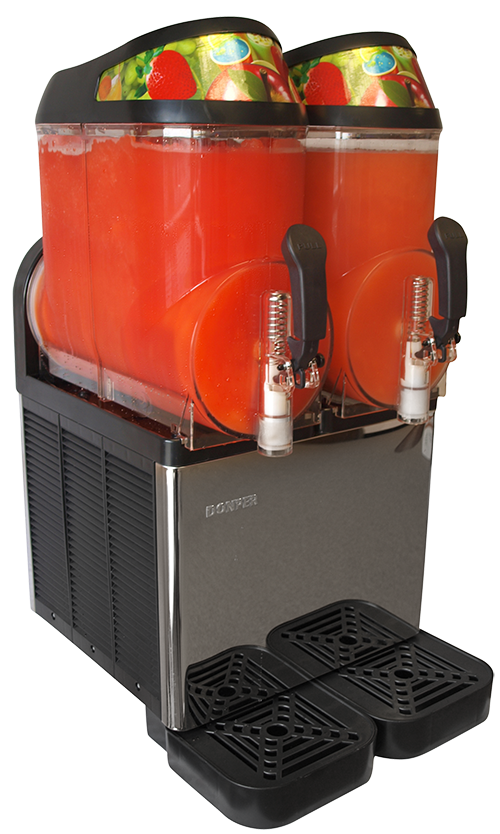
In addition, another base mix which is called FRUIT WHIP is a bold and refreshing fruit soft-serve like what is served at Disneyland.  And it has probiotics.  What is really cool is that if you add double the water in your recipe and use a frozen drink machine, the FRUIT WHIP turns into a self-serve smoothie.  See link to two machine options for self-serve smoothies made from just Fruit Whip base + flavor + water.


https://frocup.com/product/elmeco-frozen-beverage-smoothie-machine-call-for-best-price/
https://frocup.com/product/commercial-frozen-drink-machine-donper-xf124/

Posted on

Daily Opening Procedures

Every frozen yogurt operator asks how they can make fantastic and consistent frozen yogurt. They want their product to come out of the machine with the same creamy, smooth texture every day. The key to achieving this is doing two daily procedures every morning before opening.

Prime the MachineYogurtInCup

Priming the machine refreshes the product in the freezing cylinder and hopper. Here are the steps:

  1. With the machine on Standby (or Overnight) Mode, remove the air tube (carburetor tube) from the hopper.
  2. Stir the mix in the hopper with a small whisk.
  3. Dispense 1-2 quarts of liquid mix from the machine (by pulling the handle on the front).
  4. Pour the mix back into the hopper and stir with a whisk.

The machine is now primed and ready to have the air set.

Set the Air

With gravity machines, the mix is poured into a hopper on the top of the machine and gravity pulls the mix into the freezing cylinder. On a gravity machines you need to manually set the air, for a maximum of 35% air.

One very important piece on the machine is the carburetor tube or air tube. The air tube is a skinny tube – usually stainless steel – that you insert into the intake hole in the bottom of the hopper. Once inserted, the top of the tube sticks up out of the product allowing air to get down into the product. All air tubes have some way to shut off the product intake – either by flipping the tube over or by closing off the intake hole using a sleeve that fits around the tube.

Here are the steps to set the air:

  1. After you’ve primed the machine, insert the air tube with the feed hole at the top of the tube (sticking out of the mix) to stop the product from flowing into the freezing cylinder.
  2. Keeping the intake closed, dispense 8-10 ounces of frozen yogurt into a clean cup. This product can be put back into the hopper.
  3. Turn on the soft-serve machine and wait for it to freeze down and for the motor turn off.
  4. Once the motor turns off and the product is frozen, open the air intake either by flipping the air tube around so the feed hole is now at the bottom (submerged in the mix) or sliding the sleeve on the tube (depending on your style of air tube).
  5. The overrun is now set and the product should come out smooth and creamy. As long as you leave the air tube in place it will stay this way. You can repeat this process as needed.
Another important factor in dispensing a great product is the temperature of the frozen yogurt coming out of the machine. Nanci’s regular mixes are best served at 17 degrees F, and the stevia and non-dairy mixes are best served at 24-25 degrees F.
Posted on

Preparing for “Busy Season”

Did you have a slow winter or maybe even close for the winter cold?  Spring is around the corner which makes now a great time to start preparing to open back up or generate new interest for the year. 

Here are some insights you might consider as you prepare for the warmer weather. 

SOCIAL MEDIA:  To generate interest, don’t forget to use Social Media.  Some people with home businesses ONLY do business using Social Media and understand what a great tool it can be.  Don’t overwhelm your customers or followers with too many posts, but regular reminders and posts are great!

PROMOTIONS:  Start thinking of promotions you can use throughout the year.  Whether it is stamp cards to earn free yogurt, or maybe even a contest where someone gets to choose their favorite flavor as “Flavor of the Week” or have a “Customer of the Month.”  Whatever you choose to do, don’t forget how important it is to be part of your community.  Get involved in sponsoring local teams or schools and get your name out there. 

TRAINING:  Use this time for training your employees better, make sure everyone is on the same page with not only operating procedures but with the excellent customer service you want to offer your customers.  Quiz your staff on product knowledge such as how to put air into the product to make it creamier or why your product is better than most.

NEW MENU ITEMS:  Start thinking of things you can easily add to your menu that will generate more interest and excitement.  Things like salads, soups, and bakery items.  Anything that will help you to diversify and attract new customers is a good thing.  Remember to clear it with your landlord.  

INVENTORY:This is a great time to take a really good inventory.  Go through everything and make sure that expiration and best buy dates are still good.  Move everything that needs to be used first to the front and don’t forget to rotate your stock as new items come in. 

MAINTENANCE: Don’t forget to have your machines looked over.  Replace any worn parts, lube well and clean thoroughly.  The better care you take of your machines, the longer they will last.

NEW FLAVORS:This is a good time to also think about changing out a few yogurt flavors on your menu.  NANCIS.COM is a great resource for flavor ideas and new flavor cards and graphics.  Watch for our newsletters for Nanci’s flavor specials.  And if there is ever a new flavor you’d like us to carry, type it in the “Notes” section at checkout on FroCup.com.  

We love to hear your creative recipe ideas!  Here is one we liked that a client shared:  Candy Bar Flavor: 1/2 bag Chocolate Base + 1/2 bag Vanilla Base + 3 oz Salted Caramel + 3 oz Peanut Butter + 2 gallons water.  Think outside the box and try something new!  You’ll be surprised how many flavors are good in different bases; try Strawberry or Red Raspberry in chocolate and see what you think!   

Posted on

Tips for buying a soft-serve machine

When opening a frozen yogurt store, the soft-serve machines will be the largest single expense. A good machine is critical to serving good product. There are several basic things you need to know about frozen yogurt machines. This information may seem overwhelming, but given that you might spend $50,000 on your soft-serve machines, the investment of your time will be worth it.

The Basics
To make frozen yogurt you’ll need a commercial grade soft-serve machine (soft-serve machines and frozen yogurt machines are the same thing). Here are the basic components of the machine:

  • Hopper – the area where you pour the frozen yogurt mix.
  • Freezing cylinder – this is a small shaft that sits horizontal inside the machine. The mix drips from the hopper into the freezing cylinder where it freezes.
  • Beaters – these are inside the freezing cylinder and they spin around to keep the mix from freezing solid. They also help whip air into the machine and make a nice creamy product.
  • Front plate – this is the piece that goes on the front of the machine with the handles. It also includes the opening where the frozen yogurt is dispensed. Most machines have a star shaped design where the product comes out – giving the frozen yogurt the look we all recognize.
  • Overrun – this is the air that is in the frozen yogurt mix. Air is critical to making a nice creamy product. Without overrun, the product will come out dense, icy, and won’t taste right. Visit the Training page on the Nanci’s website for a video on how to control overrun.

Machine Sizes
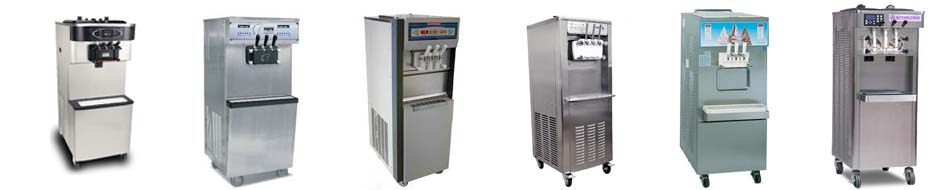
There are several different sizes, but for our purposes we’ll break it down into two types – floor model and counter-top model.

Floor model – these machines go all the way to the floor and are on rollers. They are either medium or high capacity and usually require 220-volts, but not always (see the section on electricity). They usually have two flavors and a twist (although they can come in a one-flavor model). For frozen yogurt shops, this is usually the best option.

Counter-top model – these machines sit on a counter or cart. They are usually low capacity to medium capacity. They are available with one flavor one two flavors and a twist. These machines can be a good option as an add on to an existing concept, like a sandwich shop.

Electricity
Most medium to high-capacity frozen yogurt machines require 220 volt electricity, although some are 115 volts. In either case, they will require different outlets than your standard home electrical outlet. They will also require higher amps than normally. Be sure to check with an electrician to see what will be required and how much it will cost.

Gravity versus Pump
This refers to how the mix gets into the freezing cylinder. With a gravity machine the hopper is at the top of the machine. The mix is poured into the hopper and then gravity pulls the mix into the freezing cylinder. With a pump machine, the hopper is pressurized and the mix is pumped into the freezing cylinder. The advantages to a gravity fed machine is that they cost less and are easy to fix. The advantages to a pump machine is that you have complete control over the amount of air you put into the final product. This can affect the quality of your product and the cost.

Gravity machines can put in up to 45% air and pump/pressurized machines can put in up to 100% air (which means equal parts mix and air).

Air Cooled versus Water Cooled
The motors in soft-serve machines produce heat and need to be cooled. The two methods for cooling are either air cooled with a fan or water cooled with pipes that run water through the machine to cool it. Overall, we recommend air cooled because they are less expensive to install and need less maintenance.

Air cooled machines don’t require any additional investment when installed, and they can be less expensive to operate (depending on your electricity costs versus water costs). Water cooled require installation of a water system, which can cost $15,000-$40,000. Water cooled machines make less noise and produce less heat. You may save on utility costs if your water costs are much lower than your electricity.

Soft-Serve Machine Companies
There are several companies that manufacture and sell frozen yogurt machines. Some are made in the United States and others are made in other countries, like China. Prices on floor models range from $5,000 to $15,000. The machines will vary in quality, warranty offered, and production capacity. The right machine for you depends on your constraints (like cash or the ability to finance) and your goals (how many machines you need, the type of concept you are doing). There isn’t always just one right answer for what machine you should buy. Contact a frozen yogurt expert at Nanci’s and we can discuss it with you. We don’t sell machines, so we’re a great neutral, third-party to talk with.

If you decide to buy machines at the low-end of the price range, make sure to machines are made with good materials and parts. For example, all machines are made with stainless steel, but steel has different grades of quality. Some machines that are made with the low-quality stainless steel can rust and cause many problems.

Also, keep in mind that regardless of the brand of soft-serve machine you purchase, you’ll want to make sure you have good access to service. All machines break at some point, and you’ll need a good technician that can work on them.

In your negotiations with machine companies be sure to ask for free in-person training and free parts (such as o-rings and machine lube). Some companies offer free Nanci’s product to off set the initial costs of the machine.

If you have any questions call Nanci’s Frozen Yogurt at 1-800-788-0808.

Posted on

Three keys to starting your own frozen yogurt business

Here are three vital keys to starting a frozen yogurt business on your own:

1. Business understanding and experience. If you don’t have these skills find a partner or advisor who does.

  • Basic money management skills (payables and receivables).
  • Inventory management.
  • Attention to detail.
  • People management skills.

2. Find great suppliers. Great suppliers should be more like partners with you. They can give you advice and help solve your problems. You’ll need suppliers for:

  • Frozen yogurt mix and flavorings – give us a call – we know a great company : )
  • Soft-serve machines.
  • Toppings.
  • Supplier, including cups and spoons.
  • Other equipment (Point of Sale system, sinks, refrigerator/freezer, toppings bar, tables, chairs, toppings containers, etc.).

3. Effectively market your frozen yogurt business. The elements of effective marketing include:

  • A great location.
  • In-store marketing and great customer service to drive repeat customers.
  • Advertising or other marketing that makes sense in your area (local newspaper or magazine, flyers at events, coupons, mailers, etc.).
  • Online and social media presence.
  • Word of mouth. Eventually this will be one of your greatest marketing tools, but you can’t just sit back and expect it to take off.

Most importantly, don’t overcomplicate things…and have fun!

Posted on

Shipping Q&A: International (Part 2 of 2)

Mysteries of Shipping Revealed: International Orders

This Q&A is part 2 in a 2 part series.  This article pertains to shipping internationally outside of the United States. 

How are international orders packed for shipping?

Initial sample orders are packed in a single cardboard box and labeled as samples and shipped with FedEx Express International or UPS International.  If you prefer to use your courier such as DHL, let us know.Warehouse Packing 3
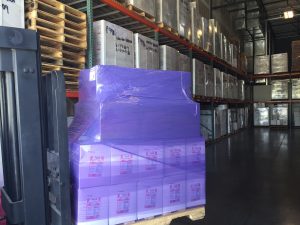
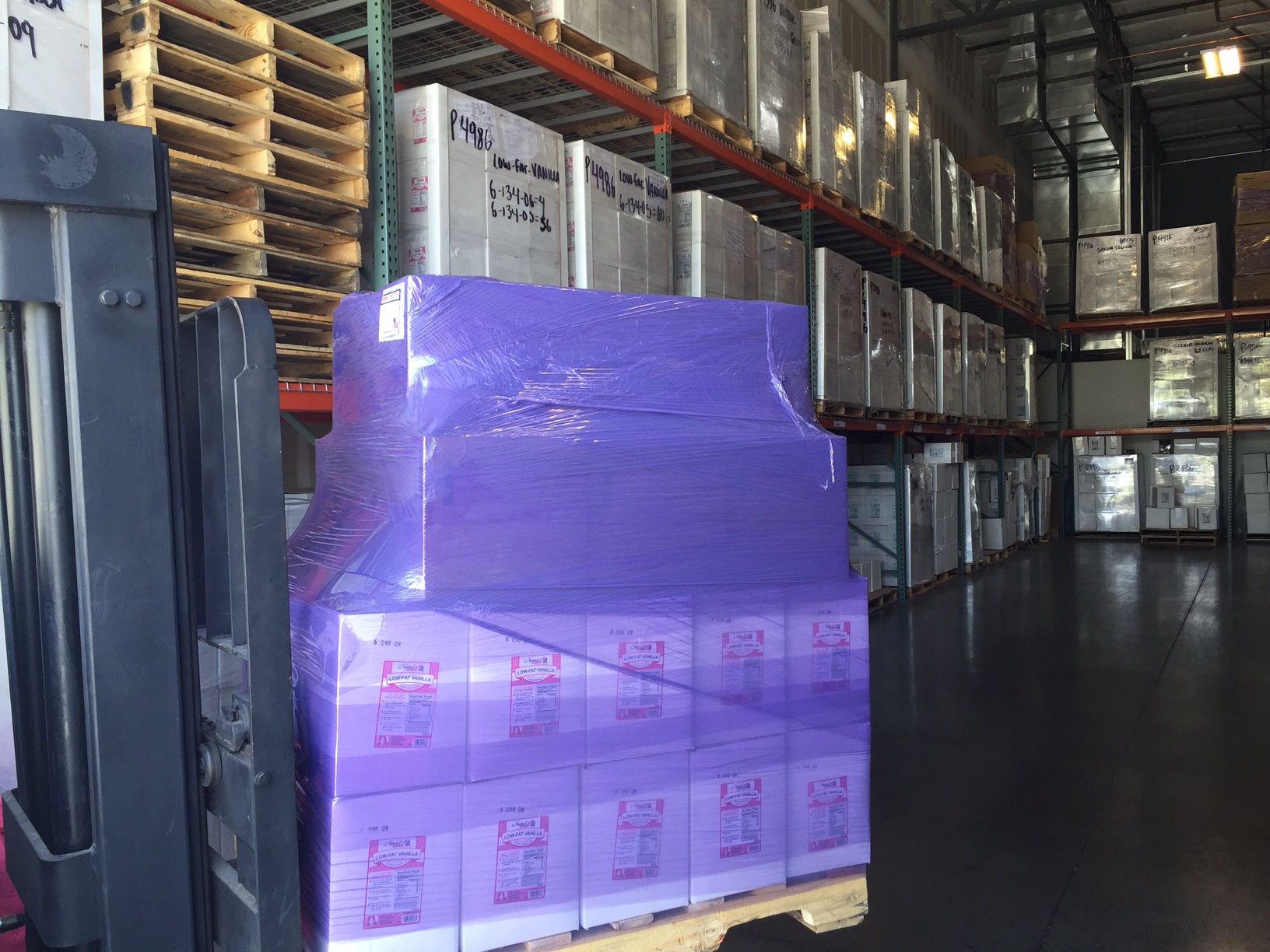
Regular orders are packed in cardboard boxes stacked on a heat treated wooden pallet and wrapped in plastic wrap.  Mixed pallets and less than full pallets are always wrapped in purple.  Dry bases are the heaviest and will be stacked on the bottom with the flavoring bottles on top.  Cups and spoons and other supplies will then be stacked on top of those base mix and flavoring boxes.  All orders are double checked through our strict quality control process so you can be confident they will arrive according to your packing list.  Note on the bill of lading at delivery if there is any damage or missing boxes.  Claims must be filed within 5 days of delivery.

Which is the most cost effective way to ship?

Ocean shipping is definitely the least expensive way to move product around the world.  Carriers charge based on weight but mostly on volume so it makes sense to maximize the space on each pallet.  We can fit 60 cases of dry mix on each pallet.  If you are also ordering flavorings, it works well to remove a few cases of dry mix so the flavorings can fit on the same pallet.  Ocean shipping costs significantly less than air shipping.  

For example, shipping for a recent order of 30 cases to South Africa cost $3500 by airplane when it would have only cost $1200 by boat.  A similar order that shipped to China recently cost $2300 by air when it would have only cost $900 by boat.

What is the fastest way to get an international order?

Air shipping is definitely the fastest way to get any order.  For small sample orders, the only way to ship is by airplane.  These small orders are often necessary for the first time to take the product to customs agents in the destination country for testing and approval before a larger ocean order is place.  Shipping a 14 kg sample box to most countries costs about $200 and arrives usually in less than 7 days.

Larger orders such as a typical half (30 cases) or full pallet (60 cases) order take about 10 days by air as compared to 40 days by ocean.  Contact us for a specific quote for your country.

intl-shipping-1Do you ship to my address or to the port?

Door to Door means the shipment goes all the way from the factory to your doorstep.  Small packages shipped via FedEx Express International Air will ship this way and FedEx will bill the customs fees and tariffs directly to you upon delivery.  We don’t ship any international pallet orders Door to Door because the customs clearance process is your responsibility and transit stops at your port for import clearance.  Door to Port means the shipment leaves our factory and arrives at the ocean port or airport and then you clear it through customs and take delivery and arrange the destination country inland transport.  Door to Port is how we arrange the majority of our international shipments.  Port to Port means we deliver the goods to your freight forwarder in the USA and they take it from there.  They might also be willing to deliver it all the way to you via Port to Door – you can negotiate that with them if you decide to set up your own shipping. 

Can I use my own ocean freight forwarder?

Yes, many of our clients actually use their own freight forwarder to arrange the ocean shipping for themselves.  In those cases, it often works best to have us deliver the order to your freight forwarder’s warehouse in California or Florida.  We offer better inland USA transport rates than most freight forwarders.  They excel at offering good ocean rates but usually can’t beat our inland rates.

What about customs clearance?

All orders are shipped FOB Origin which means title of ownership passes from seller to buyer when the goods leave Nanci’s warehouse.  We don’t guarantee customs clearance.  Even when we have shipped for years to a country, unusual or random circumstances can lead to an order getting stopped at customs if the importer doesn’t have the correct import permit.  You always want to engage a good customs broker before placing your order to make sure you have all the proper permits and approvals from customs.  In addition to preparing to import food products, you’ll receive an international shipping authorization from us that will require you to agree to the following:

Wudel International Shipping Terms and Authorization

As the consignee, I acknowledge that Wudel International (Nanci’s Frozen Yogurt) is arranging shipping as a convenience to me.  I take full ownership of the shipment once it leaves Wudel’s factory/warehouse in the U.S.A.  Wudel does not pay destination charges, duties or customs charges and does not guarantee transit times, customs clearance, or delivery of goods — such details are the sole responsibility of the consignee.  Wudel is not responsible if goods are delayed in transit or if goods are rejected by customs for any reason.  The consignee is responsible to be aware of and to adhere to all applicable customs requirements to import food and dairy products and equipment purchased from the U.S.A.

Which are some countries where the Nanci’s products seem to be more easily imported?

With the right connections and permits, the products can be imported into any country.  Here is a list of recent ones that were fairly efficient:  Aruba, Bahamas, Belize, Bolivia, Cameroon, Canada, Cayman Islands, China, Curacao, Cyprus, Denmark, Dominica, Dominican Republic, Fiji, French Polynesia, Ghana, Greece, Guam, Honduras, Hong Kong, Ireland, Jamaica, Jordan, Laos, Lebanon, Maldives, Mauritius, Mexico, New Zealand, Nicaragua, Nigeria, Norway, Oman, Pakistan, South Africa, Surinam, Switzerland, Trinidad, UAE, Uganda, Venezuela, Vietnam.

Which are some countries where importing has been more difficult?

Dairy food products seem to be more closely scrutinized than non-dairy.  If you have concerns importing into these countries, you might consider trying our non-dairy lineup first.  Also, labeling is important in some countries.  Check with customs to make sure they don’t require an additional label on each box in the official language of that country with our plant code.  Here are some countries that may require extra preparation on your part to comply with customs demands: India, Japan, Australia, Spain, France, Saudi Arabia, Peru, Columbia, Thailand, Sril Lanka.

Are there any plans to have Nanci’s products available in my country from a distributor so I don’t have to import them through customs?

We love to have product already in country for you and in some countries it may be available.  Check with us to see if there is a local contact who has product or who can broker your order for you.  We may have another client in your country already importing for their own business and willing to import your order with theirs.


6352541_xxl

Posted on

Calling All Frozen Yogurt Franchisees

Considering Going Independent as a Frozen Yogurt Shop?  Now Might Be The Time

Have you been looking for an alternative to the franchise control and transitioning to become a free and independent frozen yogurt shop? The concept is appealing to many and just might be the right next step for you too. Current economic events are disrupting supply chains, raising costs, and changing consumer habits.

Independent ice cream shops are an alternative to the frozen yogurt franchise model and are free to change more quickly and adjust to local tastes and preferences. In addition, you cut expenses when you source the frozen yogurt mix yourself WITHOUT extra franchise fees.

Here are some questions you might ask yourself:

1. Have I been selling frozen yogurt as a business long enough to be established with a good customer base?

2. Do I have a positive attitude to solve business issues and problems that might come up in the future?

3. Do I want more creative control over my business and look forward to creating my own brand in my community?

4. Do I want to eliminate franchise fees and restrictions on who I can buy from?

5. Am I willing to dig in and drive my business to its full potential?

Alternatives to the Frozen Yogurt Franchise Model: Nanci’s Frozen Yogurt and FroCup.com can help your Frozen Yogurt franchise shop:

1. Knowledge and Experience – Nanci’s has been in the food industry and with a specialty focus on the frozen yogurt industry for more than 40 years! We know frozen yogurt and soft-serve ice cream. We are an industry leader in soft-serve product research and development; we have created several “firsts” in the yogurt industry. We continue to create and improve.

2. Training and Customer Support – We’re not a franchise but we love to help. Check out our steps to independence to get you started at nancis.com/grow. We have training videos at nancis.com/training and we’re here to answer any questions you have by phone or email.

3. Ordering options – You can order directly from our e-commerce website anytime you need at FroCup.com. You are also welcome to email or call in orders during our office hours, whichever method is most convenient for you.

4. Product availability – We have most everything you will need to run your Frozen Yogurt shop available on FroCup.com. From the base mixes and flavors to cups and spoons and everything in between. We work to keep everything in stock and ready for you. We also ship out orders as soon as possible so that you get your products in a timely and reliable manner.

Call us at 1-800-788-0808 to get started.

Posted on

Machine Maintenance

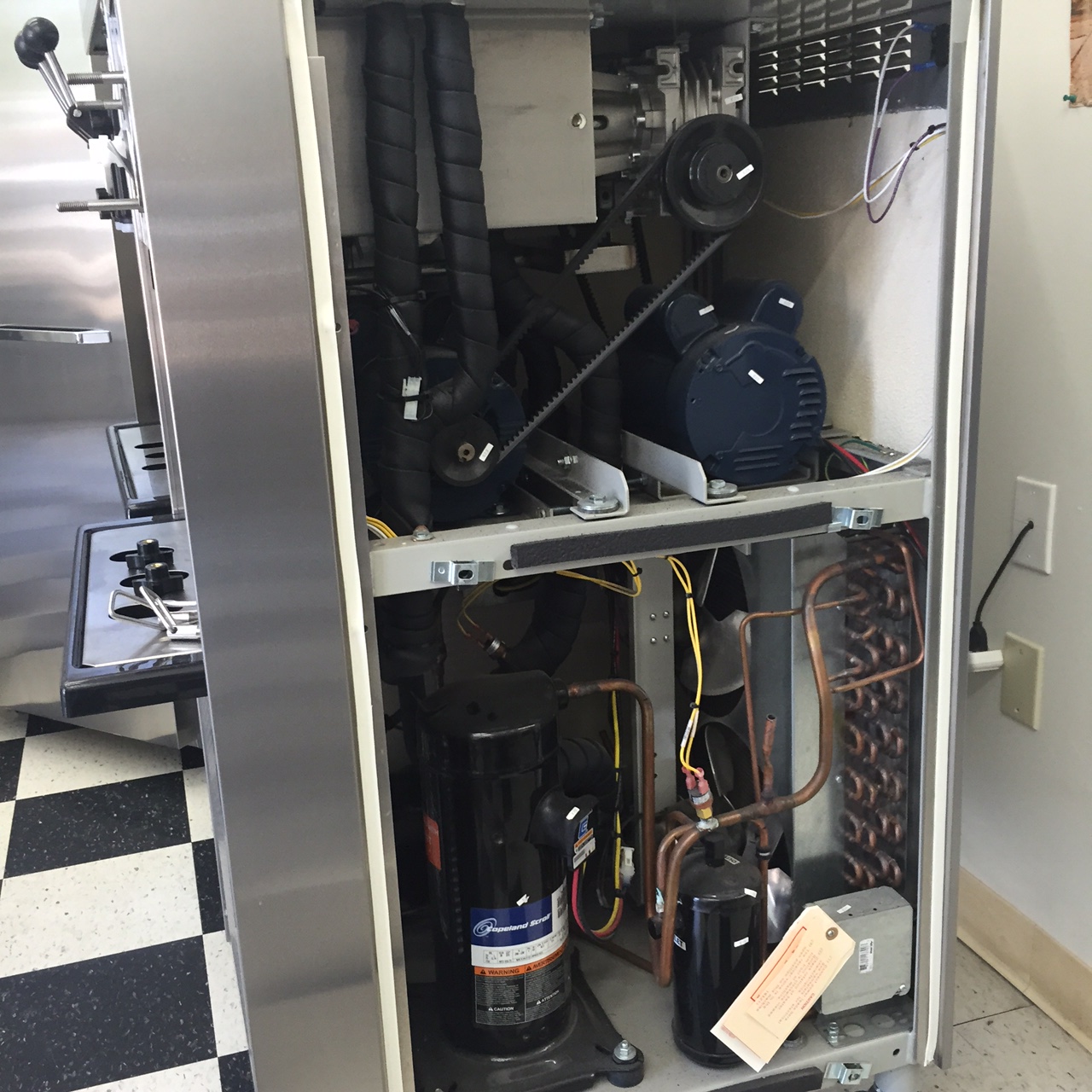
The start of a new year is aSLX400En excellent opportunity to take a look at your soft-serve machine and make sure that it is primed and ready to go for 2016! This includes not only continually cleaning your machine, but also proper lubrication and checking for any wearable parts that may have seen better days. Annually is a good time to remove the side panels and visually inspect for leaks from the motor casing and loose connections. You should also take the temperature of the hopper and freezing cylinder on standby and auto modes and compare that to what the machine is saying to check that it is calibrated correctly still. Ensuring that your machine is running properly and that it is consistently producing a quality product throughout the year will be essential to your customer base and overall margins at the end of the year.

Cleaning your machine is an important aspect of maintenance to help the longevity of your machine. Get in the habit of cleaning your machine at least once a week. This process includes running a sanitizing agent through the machine, effectively killing any bacteria that may have grown or built up.  If your machine goes weeks without being thoroughly and properly cleaned harmful bacteria may build up and could potentially lead to spoiled product.

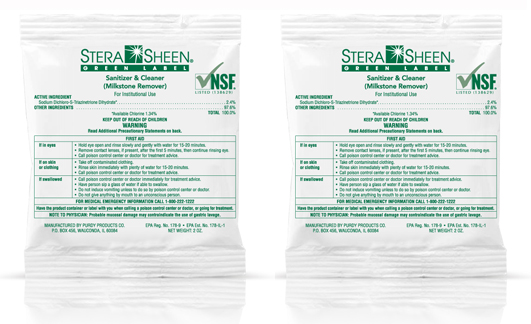
Once the sanitizing agent is mixed with water and poured into the hopper of the machine, put the machine on the wash cycle and allow the product to cycle through the machine for a period of 5 minutes. This will allow the sanitizing agent to reach all of the nooks and crannies of the machine, killing any remaining bacteria. Be careful not to enable a feature on the machine that willPacket x2 freeze down the product, as the process of the water freezing could severely damage your machine. Every other week, we recommend pulling all of the machine components such as the face plate and the freezing cylinder shaft and let them soak in hot soapy water as well. The process of cleaning the machine is simple in its procedure, and it can be done any employee if they are properly trained how to do so. Check out http://frocup.com/product/sanitizer-packets/ to get started today!

Lubrication is another key technique in keeping your machine running for an extended period of time. The main component of the machine that requires lubrication is the back end of the shaft that sits deeper inside the freezing cylinder. Pull this out and pull off the rubber gasket that fits on the end of it. Lubricate around the square piece at the end of the shaft and place the gasket back onto the lubricated piece. When you pull out the freezing cylinder shaft to clean it is an excellent time to lubricate it as well. Tubes of all-purpose lube are also sold at http://frocup.com/product/machine-lube/.

There are various wearable machine parts that can become damaged and wear down over time. The scraper blades, for example, attach to the shaft on the inside of the freezing cylinder wear down and don’t scrape the edge of the cylinder with the exactness and precision that they once did. This leads to the freezing of product on the edge of the cylinder and can lower the overall quality of your product. These scraper blades are different with each individual machine company so make sure the blade is rated for your model of machine before buying replacements. You can find various machine springs, seals, and O-rings as replacement parts at http://frocup.com/product-category/supplies/.

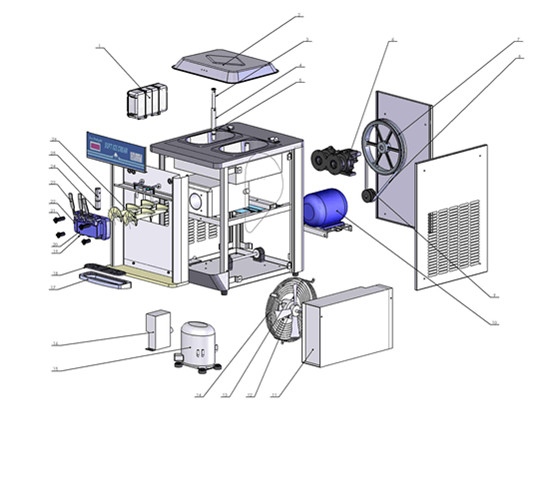
Look for general brittleness or the wearing down of plastic parts as key points in replacement. Replacing parts before they go out will save you from costly damage to other components of the machine and keep you from having a non-functioning machine during your peak season. Understanding your machine is very important in maintaining it over time. Pulling out all of the main components and familiarizing yourself with them as you sanitize, lubricate, and replace any necessary parts will help you to keep your machine running strong throughout 2016 and beyond.machine breakdown diagram